Ever wondered how successful marketers track their website visitors with laser-sharp precision? UTM codes might sound complex, but they’re actually the cornerstone of effective digital marketing measurement and campaign optimization.
UTM tracking parameters are additional URL elements that monitor web traffic from various marketing campaigns and sources. These codes incorporate up to five essential parameters: Campaign, Source, Medium, Term, and Content. This comprehensive tracking provides marketers with granular data about traffic origins. Analytics platforms like Google Analytics leverage UTM tracking to demonstrate ROI from channels including social media marketing, email campaigns, and pay-per-click advertising.
This comprehensive guide covers everything about UTM codes — from fundamental structure to advanced implementation strategies. You’ll master avoiding common tracking mistakes and accurately measuring your marketing campaign performance.
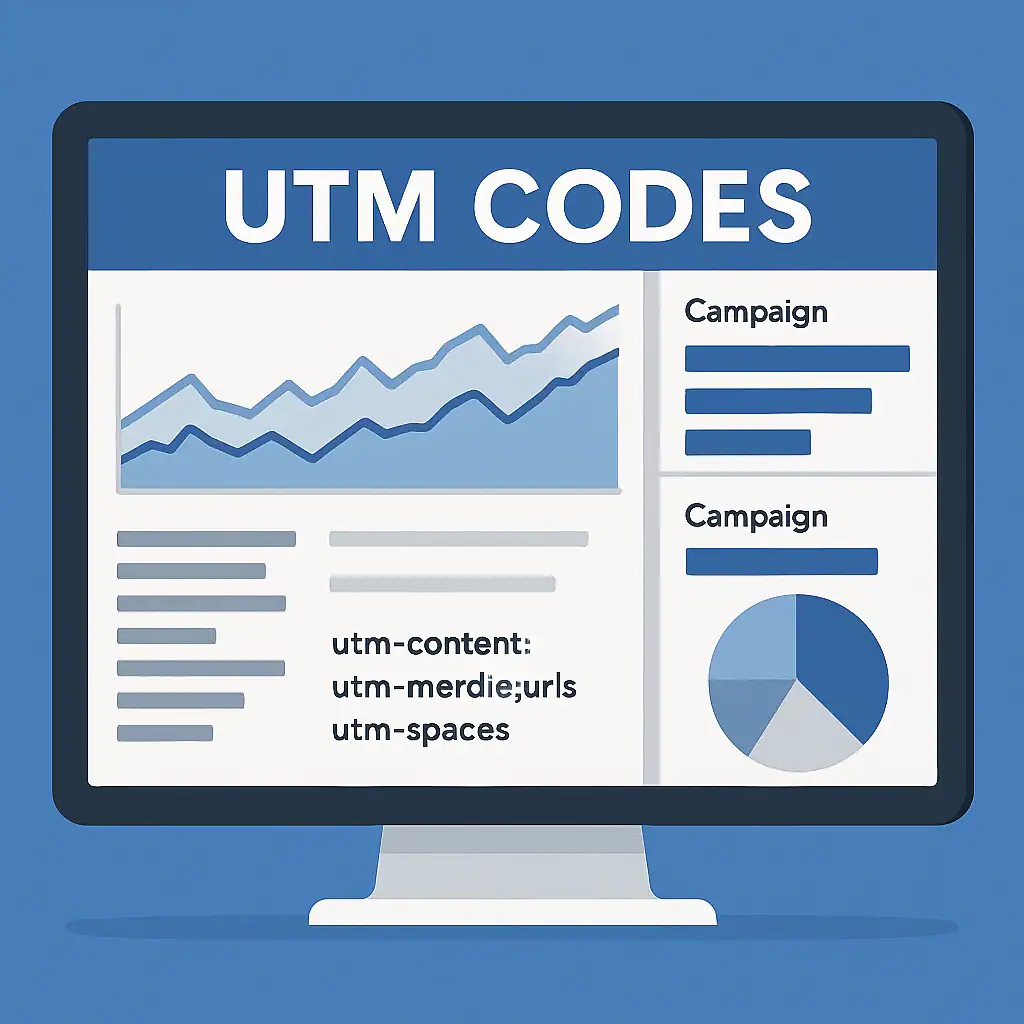
Understanding UTM Codes: Essential Components Breakdown
A UTM code appends specific tracking parameters to URL endings, enabling precise website traffic monitoring and marketing campaign performance analysis. These tracking modules originated with Urchin Software Corporation before Google’s acquisition in 2005. They function as digital fingerprints that trace your marketing investments back to specific sources.
UTM Parameter Architecture
UTM code structure begins with a question mark (?) following the base URL. Subsequent parameters track various traffic aspects, each starting with ‘utm_’ followed by an equals sign (=) and the parameter value. Multiple parameters connect using ampersands (&). Here’s a practical UTM-tagged URL example:
yourwebsite.com/?utm_source=facebook&utm_medium=social&utm_campaign=spring-sale-2025
Mandatory vs Optional UTM Parameters
Effective UTM tracking requires three core parameters out of five available options:
Required Parameters:
- utm_source: Identifies traffic origin (Facebook, Google, newsletter)
- utm_medium: Specifies marketing channel type (email, social, cpc, organic)
- utm_campaign: Names your specific marketing initiative (spring-sale, product-launch)
Optional Parameters:
- utm_content: Distinguishes similar content within campaigns (banner-top, sidebar-ad)
- utm_term: Tracks search keywords in paid advertising campaigns
How UTM Analytics Integration Works
When users click UTM-tagged URLs, tracking parameters transmit directly to your analytics platform. These parameters populate traffic acquisition reports, enabling comprehensive campaign performance measurement across channels. Data remains active until the campaign attribution window expires — typically six months in Google Analytics.
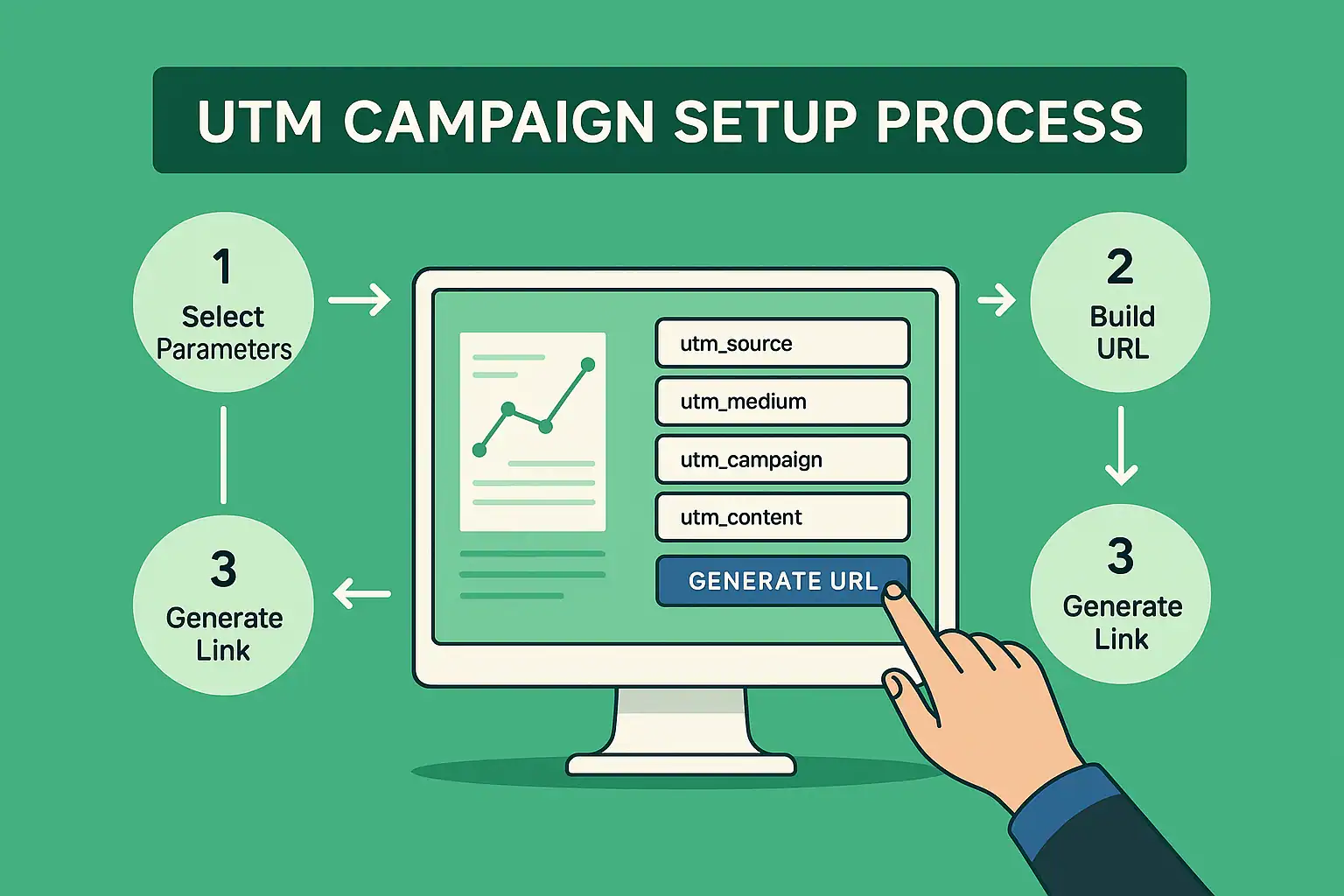
Building Your First UTM Marketing Campaign
Successful UTM campaign setup demands strategic planning and meticulous attention to detail. Follow this systematic approach to create effective UTM tracking for your digital marketing efforts.
Define Campaign Objectives
Clear objectives structure your UTM parameters effectively. Common goals include tracking email marketing ROI, measuring social media engagement rates, or analyzing paid advertising performance. Maintain a comprehensive spreadsheet documenting all UTM-tagged links to ensure team consistency and prevent tracking conflicts.
Parameter Selection Strategy
Strategic parameter selection requires a systematic methodology. Structure your UTM framework using these elements:
- Source: Define traffic origins (facebook, google-ads, linkedin, newsletter)
- Medium: Specify marketing channels (email, social, cpc, display, affiliate)
- Campaign: Name marketing initiatives (black-friday-2025, webinar-series)
- Content: Track specific creative elements (video-ad, carousel-post)
- Term: Monitor keywords for paid search campaigns
Testing and Validation Protocol
Comprehensive testing ensures UTM tracking accuracy before campaign launch. Google’s Campaign URL Builder facilitates tracking code generation. Validate your links through:
- Clicking tagged URLs to verify proper functionality
- Confirming data capture in your analytics platform
- Verifying parameter consistency across all campaigns
- Testing attribution accuracy with sample traffic
Critical UTM Code Mistakes That Destroy Data Accuracy
Before we dive into common mistakes, it’s worth exploring how UTM tracking should work in ideal conditions. Google’s Campaign URL Builder is a free and official tool that lets you generate clean, trackable URLs in seconds.
UTM implementation errors can permanently compromise your marketing analytics. Industry research reveals that 30% of companies waste marketing budgets due to inadequate UTM tracking. Avoid these critical mistakes that sabotage campaign measurement.
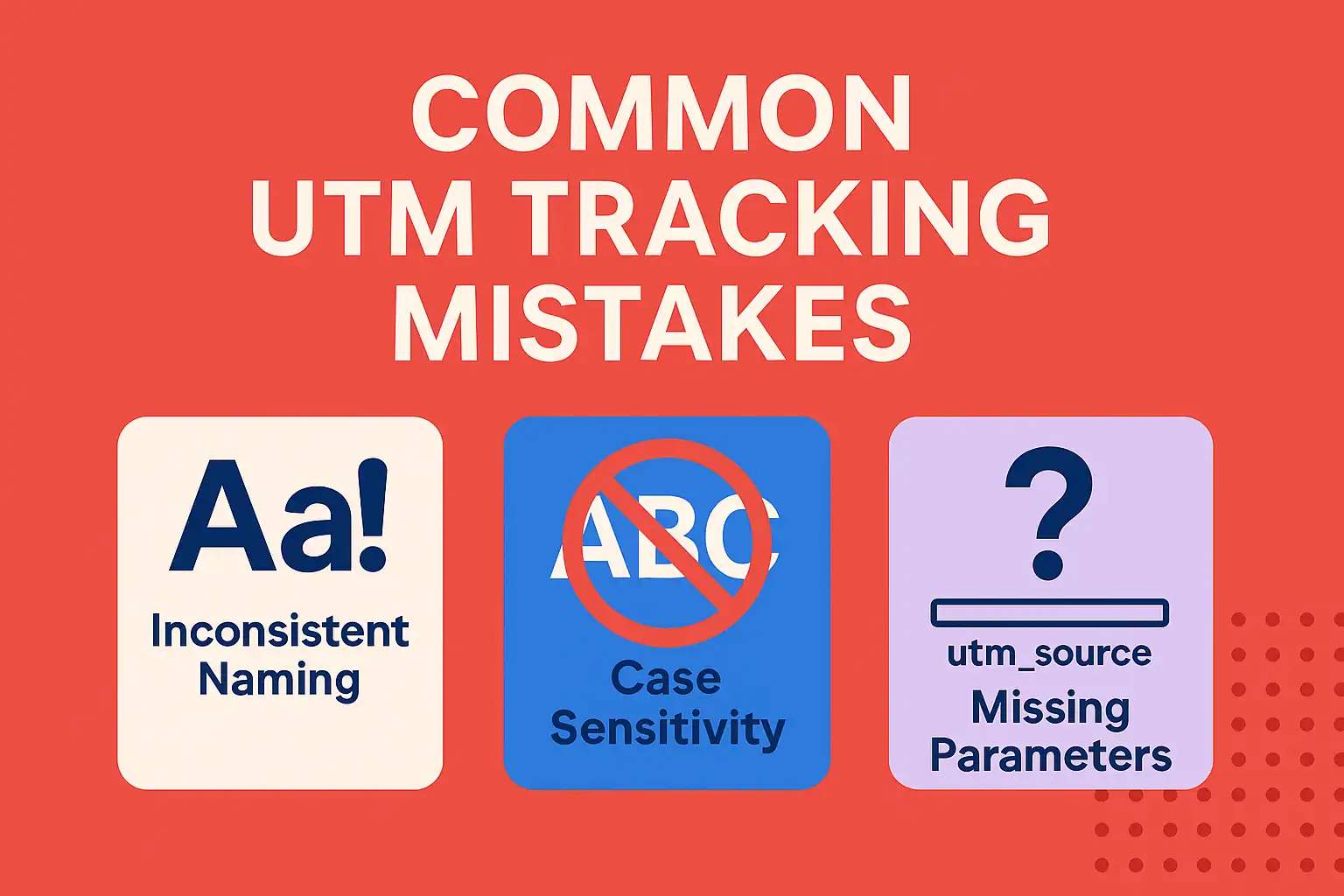
Inconsistent Naming Convention Disasters
Inconsistent UTM naming creates fragmented data segments, making analysis nearly impossible. Your tracking accuracy depends on these fundamental naming standards:
- Use hyphens or underscores for word separation (never spaces)
- Eliminate special characters (!@#$%^&*)
- Maintain consistent patterns across all campaigns
- Document naming standards for team reference
- Create UTM naming guidelines document
Case Sensitivity Catastrophes
UTM parameters are case-sensitive, meaning ‘Email’ and ’email’ appear as separate sources in analytics reports. Mixed capitalization fragments your data into multiple segments, obscuring true campaign performance. Analytics experts unanimously recommend using lowercase letters for all UTM parameters to maintain data integrity.
Missing Required Parameter Problems
Omitting or misusing mandatory parameters creates unreliable tracking data. Each UTM parameter serves a specific campaign tracking function. These three core parameters are absolutely essential:
- utm_source: Identifies traffic origin (required for attribution)
- utm_medium: Specifies marketing channel (required for channel analysis)
- utm_campaign: Names specific initiatives (required for campaign comparison)
Missing core parameters or incorrect implementation derails your entire measurement strategy. Always verify UTM structure before launching campaigns and ensure your team understands parameter requirements.
Measuring Campaign Success Through Advanced UTM Analytics
Effective marketing campaign measurement relies on tracking the right metrics with precision. UTM tracking in Google Analytics provides comprehensive insights into campaign performance across all marketing channels.
Essential Metrics for UTM Campaign Analysis
Monitor these critical performance indicators for comprehensive campaign evaluation:
- Sessions and User Engagement: Total sessions, engagement rate, pages per session
- Conversion Metrics: Goal completions, transaction volume, conversion rates
- Traffic Quality Indicators: Bounce rate, average session duration, return visitor rate
- Channel Performance: Traffic volume by source, cost per acquisition by medium
- Campaign ROI: Revenue attribution, cost per conversion, lifetime value
Creating Custom UTM Reports
Custom reports in Google Analytics 4 unlock detailed campaign insights when UTM parameters are properly implemented. Build comprehensive campaign reports by:
- Navigating to the ‘Explore’ tab and selecting ‘Blank’
- Adding key dimensions: Session campaign, Session source/medium, Landing page
- Including essential metrics: Sessions, engagement rate, conversions, revenue
- Applying filters to focus on specific campaign periods or channels
- Creating saved reports for regular performance monitoring
Data Interpretation and Optimization Strategies
Interpreting UTM data requires understanding specific patterns and performance indicators. The Source/Medium report under Acquisition enables direct comparison between traffic channels. Segment data by UTM parameters to identify which marketing tactics generate high-quality traffic and conversions.
Audience segmentation based on traffic sources reveals content preferences across different user groups. This segmentation enables content strategy customization for each platform, aligning marketing efforts with audience expectations. Metrics like bounce rates and session duration indicate content relevance and user satisfaction.
Advanced UTM Implementation Best Practices
Mastering advanced UTM strategies separates successful marketers from those struggling with fragmented data. Implement these professional-grade practices to maximize your campaign tracking effectiveness.
UTM Taxonomy Development
Develop a comprehensive UTM taxonomy that scales with your marketing efforts. Create standardized naming conventions for:
- Campaign naming: Include date, channel, and objective (2025-q1-email-retention)
- Source identification: Use platform-specific names (facebook-ads, google-organic)
- Medium categorization: Group similar channels (social-paid, social-organic)
- Content differentiation: Specify creative elements (video-hero, carousel-product)
Multi-Touch Attribution Modeling
Implement multi-touch attribution to understand the complete customer journey. UTM codes combined with advanced analytics reveal how different touchpoints contribute to conversions, enabling more sophisticated budget allocation and campaign optimization strategies.
Master UTM Codes for Marketing Success
UTM codes represent the foundation of professional marketing measurement and campaign optimization. These tracking parameters enable precise performance measurement across all marketing channels and initiatives.
You now understand how five UTM parameters collaborate to reveal traffic origins with surgical precision. The source, medium, and campaign parameters provide comprehensive tracking capabilities for all marketing initiatives.
Data accuracy remains crucial for effective UTM tracking implementation. Your campaign measurements achieve reliability through consistent naming conventions, proper case sensitivity handling, and complete parameter inclusion. Google Analytics custom reports transform this tracking data into actionable insights for strategic marketing decisions.
UTM tracking reveals exact marketing performance metrics. Careful implementation and monitoring of these codes helps identify top-performing channels and refine strategies accordingly. This data-driven approach optimizes marketing budgets and enhances campaign effectiveness across all platforms.