GA4 vs Plausible Analytics: The Ultimate Guide for Web Analytics in 2025
Choosing the right web analytics tool can significantly impact your business’s online strategy. In this extensive guide, we thoroughly examine GA4 vs Plausible Analytics, helping you determine which analytics platform will best meet your needs in 2025.

Understanding GA4: A Deep Dive into Google Analytics 4
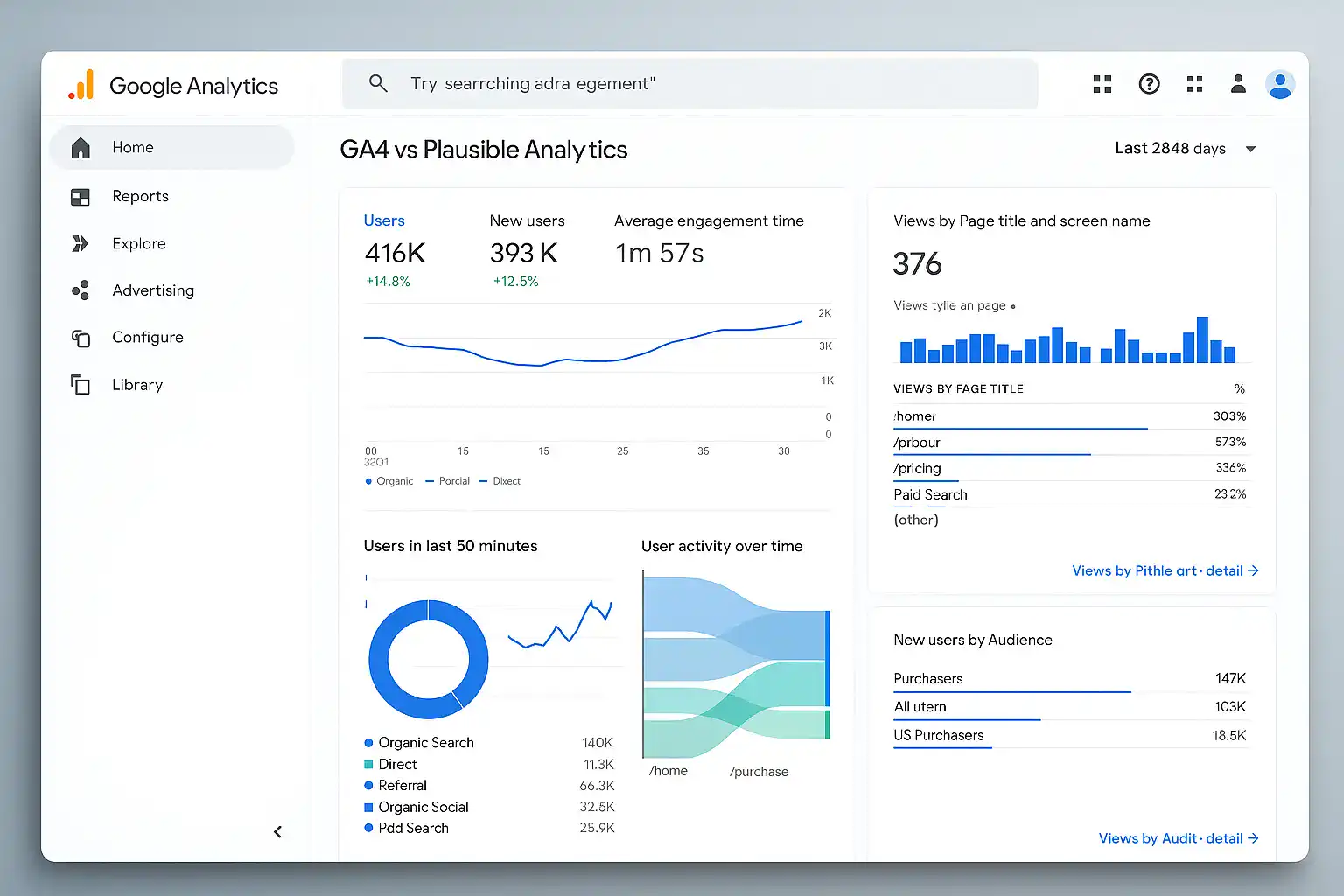
Google Analytics 4 (GA4) is Google’s latest analytics offering, designed to provide comprehensive insights into user behaviors through event-based tracking. Unlike traditional analytics that rely primarily on pageviews, GA4 captures detailed interactions, making it suitable for both web and app analysis. It has evolved significantly from Universal Analytics, introducing new capabilities such as predictive analytics, machine learning insights, and enhanced measurement for user interactions, including video views, file downloads, and form submissions.
GA4 integrates seamlessly with Google’s extensive product ecosystem, including Google Ads, BigQuery, and Google Search Console, providing marketers with powerful tools for deep analysis and optimization.
Plausible Analytics: Simplified and Privacy-Focused Web Analytics
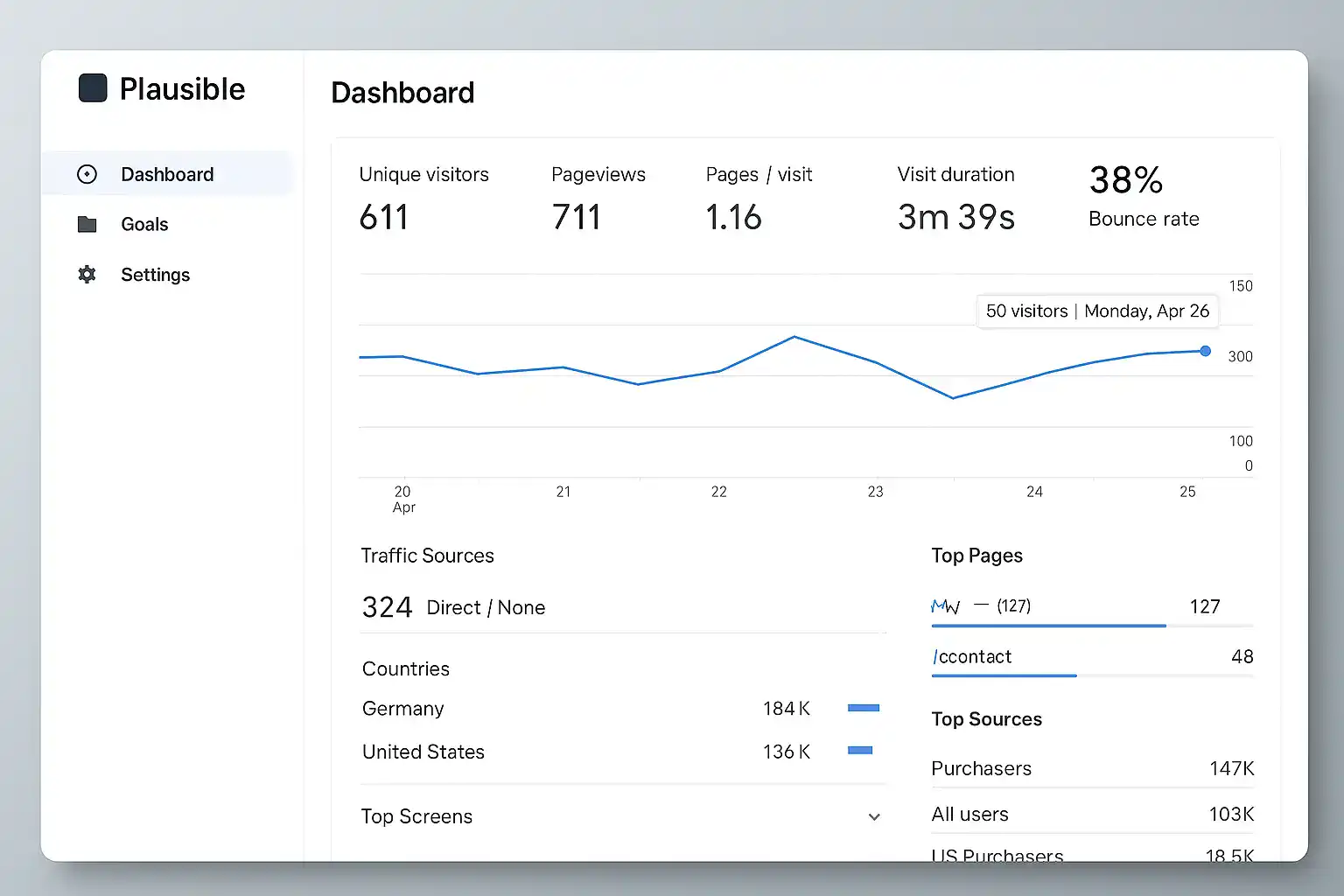
Plausible Analytics offers a streamlined, cookie-free analytics solution emphasizing user privacy. Fully compliant with GDPR, CCPA, and PECR, Plausible is perfect for businesses prioritizing data protection without sacrificing insightful analytics. Built with open-source technology, Plausible promotes transparency in data handling, giving users full visibility of how their data is managed. It’s designed to provide actionable insights quickly without overwhelming users with unnecessary complexity.
The simplicity of its dashboard ensures rapid load times and ease of use, making Plausible highly attractive for smaller businesses or privacy-oriented projects.
Comprehensive Feature Comparison: GA4 vs Plausible Analytics
| Feature | GA4 | Plausible Analytics |
|---|---|---|
| User Interface | Complex, detailed | Simple, user-friendly |
| Event Tracking | Advanced, customizable | Basic tracking |
| Privacy Compliance | Moderate, uses cookies | High, cookie-free |
| Data Retention | Default 14 months, customizable | Unlimited retention |
| Real-Time Analytics | Yes | Yes |
| Cost Structure | Free, scalable costs | Subscription starting at $9/month |
| Integration Capabilities | Extensive with Google products | Basic integrations via API |
When Should You Choose GA4?
- When your business relies heavily on detailed analytics and user segmentation.
- You’re extensively using Google’s marketing ecosystem.
- Your team has skilled analysts capable of navigating complex data.
When Should You Opt for Plausible Analytics?
- If your primary concern is privacy and data protection.
- You prefer straightforward analytics without complex setup.
- Your business or project favors simplicity and speed.
Pros and Cons of GA4 vs Plausible Analytics
Google Analytics 4 (GA4)
Pros:- Deep insights and customization options.
- Strong integration with Google’s tools.
- Advanced tracking and attribution.
- Complex setup and learning curve.
- Privacy concerns due to cookies and data collection.
Plausible Analytics
Pros:- Privacy-first approach, GDPR compliant.
- Easy to use and quick to set up.
- Fast-loading and lightweight dashboard.
- Limited analytics depth and customization.
- Minimal integration possibilities.
Real-World Scenarios: GA4 vs Plausible Analytics in Action
A large e-commerce store heavily invested in Google Ads and advanced funnel analysis might find GA4 ideal, whereas a small tech startup valuing transparency and privacy might prefer Plausible Analytics. For instance, an online publication relying on detailed readership analytics might prefer GA4 for its comprehensive audience segmentation and in-depth content analysis capabilities. Conversely, a privacy-conscious blog might opt for Plausible Analytics due to its lightweight nature and ethical data practices.
Optimizing Your Choice Between GA4 and Plausible Analytics
To make the best decision between GA4 vs Plausible Analytics, clearly define your organization’s priorities regarding data depth, privacy, complexity, and integration requirements.
Related Resources to Enhance Your Analytics Strategy
- Official Google Analytics 4 Documentation
- Official Plausible Analytics Documentation
- How to Add UTM Parameters to Google Ads
- GA4 vs Universal Analytics: What’s Changed?
Conclusion: Making the Right Choice
Ultimately, choosing between GA4 vs Plausible Analytics comes down to understanding your business needs, resources, and priorities. GA4 is robust and deeply integrated, while Plausible offers simplicity and superior privacy. Assess carefully, and invest wisely. Regardless of your choice, staying informed about the latest updates and best practices in web analytics is crucial. Platforms like Google’s official analytics blog or Plausible’s open-source community forums can offer ongoing support and valuable insights.